
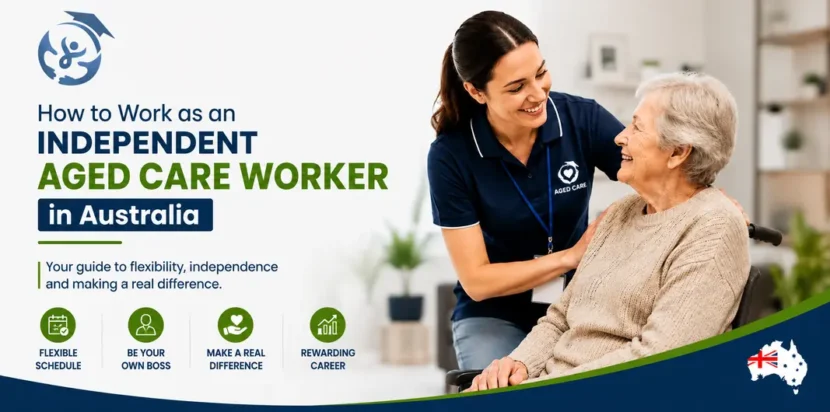
Working as an independent aged care worker can offer greater flexibility, more control over your schedule and the opportunity to build direct relationships with older Australians who need personalised support. Rather than being employed by a residential aged care facility or home care provider, independent workers typically provide services as self-employed professionals or contractors.
This career path is best suited to aged care workers who already have relevant qualifications, practical experience and a strong understanding of professional responsibilities. Before working independently, many people first gain experience with an aged care provider to build confidence, develop practical skills and understand industry standards.
In this guide, you’ll learn how to work as an independent aged care worker in Australia, including the qualifications you may need, business requirements, insurance considerations, client acquisition strategies and important compliance responsibilities. If you’re still planning to enter the industry, start with our guide on How to Become an Aged Care Worker in Australia before exploring independent work opportunities.
What Is an Independent Aged Care Worker?
An independent aged care worker is a qualified professional who supports older people directly, without permanent employment by one organisation.
Instead of working fixed shifts for one employer, independent workers usually operate as self-employed contractors or sole traders, allowing them to choose the clients they support, the services they provide and their working hours.
Depending on their qualifications, experience and business arrangements, independent aged care workers may deliver services in clients’ homes through private agreements or online care platforms. Some also receive referrals from families, healthcare professionals or community networks.
Independent workers manage their own business administration, records, insurance, and legal obligations, unlike facility employees.
Independent Aged Care Worker vs Agency Employee
Although both roles involve supporting older people, there are several important differences between working independently and being employed by an aged care provider.
| Independent Aged Care Worker | Agency or Provider Employee |
| Chooses clients and working hours | Employer allocates shifts and clients |
| Manages own business and administration | Employer manages administration |
| Responsible for arranging insurance | Insurance is often provided through the employer |
| Sets availability and service areas | Works according to rostered shifts |
| Income depends on workload and client base | Usually receives regular wages and employee benefits |
For many professionals, working independently offers greater flexibility, while traditional employment provides more stability, structured support and employee entitlements.
Independent Home Care vs Residential Aged Care
| Independent Home Care | Residential Aged Care |
| Provides care in the client’s own home. | Provides care in a residential aged care facility. |
| Usually works directly with private clients or through care platforms. | Employed by an aged care provider or residential facility. |
| Offers greater flexibility in choosing clients and working hours. | Works according to employer-assigned rosters and shifts. |
| Responsible for managing business administration, insurance and compliance. | Administrative and compliance responsibilities are generally managed by the employer. |
| Builds long-term, one-to-one relationships with clients. | Supports multiple residents as part of a multidisciplinary care team. |
| Income varies based on client demand, hourly rates and business expenses. | Receives regular wages and employee entitlements, where applicable. |
| Greater independence and business responsibility. | Greater workplace support, supervision and structured processes. |
🔑 Key Takeaway
Independent home care is generally the better choice for experienced aged care workers who value flexibility, higher earning potential, and the freedom to manage their own clients and schedule. Residential aged care, on the other hand, is often better suited to those seeking stable employment, regular income, structured shifts, and ongoing workplace support.
Who Usually Chooses This Career Path?
Independent aged care work is generally more suitable for professionals who already understand the aged care sector and are comfortable managing both client care and business responsibilities.
This pathway is commonly chosen by:
- Experienced aged care workers seeking greater flexibility
- Home care workers wanting more control over their schedules
- Professionals looking to diversify their income
- Individuals interested in self-employment
- Care workers who prefer building long-term relationships with clients
- Qualified support workers expanding their career options
While independence offers greater autonomy, it also requires strong organisational skills, professional communication and a commitment to maintaining high standards of care.
Can You Work Independently as an Aged Care Worker in Australia?
Yes. Experienced aged care workers can work independently in Australia, provided they meet the relevant legal, business and client requirements.
Many independent workers operate as sole traders or contractors, delivering personalised support to older Australians in their homes. Depending on the services provided and how clients are engaged, workers may receive referrals through private networks, community connections or online care platforms that connect clients with independent care professionals.
Working independently does not remove your professional responsibilities. Clients and their families still expect safe, reliable and person-centred care that aligns with current industry standards. Independent workers are also responsible for managing their own business operations, maintaining appropriate records and ensuring they comply with applicable workplace, tax and contractual obligations.
It’s important to understand that independent work is usually a career progression rather than an entry-level pathway. Many successful independent aged care workers first develop their skills through employment with residential aged care providers, community organisations or home care services before transitioning to self-employment.
Sole Trader, Contractor or Self-Employed: What’s the Difference?
These terms are often used interchangeably, but they have slightly different meanings.
Sole Trader
A sole trader is an individual who owns and operates their own business. Many independent aged care workers choose this business structure because it is relatively straightforward to establish and manage.
Contractor
A contractor provides services under a contract rather than as an employee. Independent aged care workers may contract directly with clients, families or organisations depending on their business model.
Self-Employed
Self-employed is a broader term describing anyone who works for themselves rather than being employed by another organisation. A sole trader is one example of a self-employed person.
Understanding these differences can help you choose the business structure that best suits your circumstances. Before making financial or legal decisions, it’s advisable to seek advice from a qualified accountant or business adviser.
Qualifications You Need to Work Independently
Working independently doesn’t simply mean finding your own clients. It also means demonstrating that you have the knowledge, practical skills and professionalism to provide safe, high-quality care without the day-to-day supervision of an employer.
Although there is no single legal qualification that automatically allows someone to become an independent aged care worker, many clients, referral platforms and organisations prefer professionals who have completed recognised aged care training and gained practical industry experience.
If you’re planning to build a long-term career as an independent aged care worker, investing in the right qualifications can improve your credibility, expand your employment opportunities and help clients feel confident in your services.
Complete a Nationally Recognised Qualification
For many aged care roles, the most recognised entry-level qualification is the CHC33021 Certificate III in Individual Support (Ageing) or a relevant specialisation.
This nationally recognised qualification helps develop practical skills in areas such as:
- Person-centred care
- Personal care assistance
- Infection prevention and control
- Safe manual handling
- Communication skills
- Supporting independence
- Working safely within legal and ethical frameworks
- Dementia awareness
- Individualised support planning
While qualifications alone do not guarantee success as an independent worker, they provide the professional foundation many clients and service providers expect.
Interested in starting your aged care career? Explore our Certificate III in Individual Support (Ageing) Online Course to develop the practical skills needed for Australia’s aged care industry.
Practical Experience Matters
Completing a qualification is only the beginning.
Most successful independent aged care workers first gain hands-on experience working with residential aged care facilities, community care providers or home care organisations before becoming self-employed.
Practical experience helps you:
- Build confidence working with different clients
- Develop professional communication skills
- Learn documentation and reporting procedures
- Handle challenging situations appropriately
- Understand professional boundaries
- Improve time management
- Deliver safe and consistent care
Business Requirements for Independent Aged Care Workers
Working independently means you’re not only providing care—you are also operating a small business.
Unlike employees, independent aged care workers are generally responsible for managing their own business administration, financial records and professional obligations.
Before accepting private clients, it’s important to understand the business requirements that may apply to your situation.
Obtain an Australian Business Number (ABN)
Many independent aged care workers operate as sole traders and obtain an Australian Business Number (ABN).
An ABN allows you to:
- Invoice clients
- Receive payments
- Register your business if required
- Work as an independent contractor
- Meet taxation and business reporting requirements
Whether you need an ABN depends on how you provide your services and your working arrangements.
Understand GST Requirements
Not every independent aged care worker needs to register for GST. Requirements depend on your business circumstances and annual turnover. Consult a qualified accountant for personalised advice.
Open a Separate Business Bank Account
Keeping business finances separate from your personal finances can simplify bookkeeping, tax reporting and cash flow management.
Keep Accurate Records
Good record keeping is an essential part of operating an independent aged care business.
You should maintain organised records of:
- Client invoices
- Payments received
- Business expenses
- Work schedules
- Service agreements
Accurate records can make business administration significantly easier and help demonstrate professionalism if required.
Understand Your Tax Responsibilities
Independent workers are responsible for managing their own tax obligations. Requirements vary depending on your business structure, so consult a registered tax professional for advice specific to your circumstances.
Insurance You May Need
One of the biggest differences between working independently and being employed by an aged care provider is responsibility for your own insurance.
When you’re employed by an organisation, insurance is often arranged by the employer. As an independent worker, you may need to organise appropriate cover yourself, depending on how your business operates and the services you provide.
The type of insurance required can vary based on your business structure, contractual arrangements and client requirements.
Public Liability Insurance
Public Liability Insurance may help protect you if someone claims they suffered injury or property damage as a result of your business activities.
Professional Indemnity Insurance
Professional Indemnity Insurance may provide protection if a client alleges that professional advice or services caused financial loss or harm.
Personal Accident and Income Protection Insurance
If illness or injury prevents you from working, Personal Accident or Income Protection Insurance may provide financial support, depending on your policy.
Workers Compensation
Workers Compensation requirements vary depending on your business structure, whether you employ staff and the legislation in your state or territory.
If you operate as an individual sole trader without employees, different rules may apply compared with businesses that employ workers.
Police Checks and Worker Screening
Trust is one of the most important foundations of independent aged care work.
Clients and their families want confidence that the person entering their home is qualified, professional and suitable to provide care.
For this reason, many organisations and private clients expect independent aged care workers to complete appropriate pre-employment screening before providing services.
National Police Certificate
Many independent aged care workers maintain a current National Police Certificate as part of their professional documentation.
A police check may be requested by:
- Private clients
- Families
- Home care providers
- Online care platforms
- Community organisations
Keeping this documentation current can help demonstrate professionalism and build client confidence.
NDIS Worker Screening Check
Depending on the type of services you provide, you may also require an NDIS Worker Screening Check.
Requirements vary according to:
- The services you provide
- Your clients
- Contractual arrangements
- State or territory regulations
Always confirm the latest screening requirements before accepting new work.
Other Documents Clients May Request
In addition to qualifications and worker screening, clients or organisations may request documents such as:
- Current First Aid certificate
- CPR certification
- Proof of professional insurance
How to Find Independent Clients
Finding clients is often one of the biggest challenges for new independent aged care workers. Unlike employees who receive scheduled shifts from an employer, independent professionals are responsible for building their own client base and maintaining strong professional relationships.
The most successful independent aged care workers usually combine several client acquisition strategies rather than relying on a single source of referrals. Building trust, maintaining a strong reputation and consistently delivering high-quality care often lead to repeat work and word-of-mouth recommendations.
Build a Professional Reputation
Before actively looking for clients, ensure you have a professional foundation in place.
This includes:
- A nationally recognised aged care qualification
- Relevant practical experience
- Current police and worker screening documentation (where required)
- Appropriate insurance
- A professional resume or profile
- Clear communication skills
Clients are more likely to choose carers who appear organised, trustworthy and committed to delivering quality care.
Grow Through Referrals
Many independent aged care workers find their first clients through personal and professional referrals.
Potential referral sources include:
- Previous employers
- Former colleagues
- Existing clients
- Family members
- Friends
- Community organisations
- Allied health professionals
Providing excellent care and maintaining positive relationships often leads to recommendations, which can become one of the most reliable ways to grow your client base.
Join Online Care Platforms
Several online platforms connect independent care workers with individuals and families looking for personalised support.
One example is Mable, which allows independent support workers to create a professional profile, set their availability and connect directly with potential clients.
While these platforms can help you find work, they should be considered one option among many rather than the only source of clients. Before joining any platform, review its service fees, policies and contractual requirements to determine whether it suits your business goals.
Build Local Community Connections
Independent aged care work often relies on strong local relationships.
Networking within your community may create opportunities to connect with:
- Community groups
- Senior support organisations
- Local health professionals
- Social workers
- General practitioners
- Physiotherapists
- Occupational therapists
These professional connections may lead to referrals when older Australians require ongoing in-home support.
Deliver Outstanding Client Experiences
Satisfied clients frequently become your strongest source of future work.
Simple practices that help build long-term relationships include:
- Arriving on time
- Communicating clearly
- Respecting client preferences
- Maintaining confidentiality
- Providing reliable, person-centred care
- Keeping accurate documentation
- Following agreed care plans
Over time, consistent service quality can strengthen your professional reputation and increase opportunities through repeat clients and recommendations.
“If you’re looking for your first aged care role, see our guide on getting an aged care job with no experience.”
→ Aged Care Job With No Experience
Can You Work Through Mable or Find Private Clients?
Many independent aged care workers choose to find clients through online care platforms, while others prefer building relationships with private clients through referrals and local networking. Both approaches can help you establish an independent career, but each offers different advantages.
Working Through Mable
Mable is an online platform that connects independent support workers with individuals and families looking for aged care and disability support services. It allows workers to create a professional profile, set their availability and connect directly with potential clients.
Working through a platform may be suitable if you:
- Are new to independent work
- Want to increase your visibility
- Prefer using an established platform to connect with clients
- Need help finding your first independent opportunities
Before joining any platform, carefully review its service fees, terms and conditions, and business requirements.
Finding Private Clients
Some independent aged care workers choose to work directly with private clients rather than using an online platform.
Private clients are often found through:
- Word-of-mouth referrals
- Previous employers or colleagues
- Local community networks
- Allied health professionals
- Family recommendations
- Existing client referrals
Building a private client base can provide greater independence and stronger long-term relationships, although it usually requires more networking and business development.
How Much Can Independent Aged Care Workers Earn?
Independent aged care workers in Australia can often charge between approximately AUD $55 and $90+ per hour, depending on their qualifications, experience, location, the services they provide and how they source clients. However, there is no fixed salary, as independent workers set their own rates and manage their own workload.
Unlike employees who receive standard wages and employment benefits, independent workers manage their own pricing, workload and business expenses. As a result, earnings can vary significantly from one individual to another.
Typical Earning Potential
| Experience Level | Typical Hourly Rate (AUD)* | Best For |
| Entry-Level Independent Worker | $45–$60 | Newly qualified workers with limited experience |
| Experienced Independent Worker | $60–$80 | Workers with several years of practical experience |
| Specialist or Complex Care Worker | $80–$100+ | Dementia care, palliative care or complex support needs |
*These are indicative market ranges, not guaranteed earnings. Actual rates vary depending on the platform used, location, qualifications, client needs and business expenses.
Factors That Can Affect Your Earnings :
| Factor | May Increase Earnings |
| Experience | ✅ |
| Specialised skills | ✅ |
| Evening or weekend availability | ✅ |
| Regional demand | ✅ |
| Number of clients | ✅ |
| Business expenses | May reduce net income |
What Influences Your Income?
Several factors can affect how much an independent aged care worker earns.
These include:
- Professional qualifications
- Practical experience
- Location
- Number of clients
- Hours worked
- Types of services provided
- Business expenses
- Travel requirements
- Demand within the local community
Workers with specialised skills or extensive experience may have access to a wider range of opportunities, but income will always depend on individual circumstances and client demand.
Remember Your Business Costs
While independent workers may have greater control over their fees, they are also responsible for covering their own operating expenses.
Common business costs may include:
- Insurance
- Vehicle expenses
- Fuel
- Professional development
- Equipment
- Mobile phone
- Internet
- Accounting services
- Platform fees
- Business administration
Considering these expenses is important when evaluating the overall financial benefits of working independently.
Focus on Long-Term Sustainability
Rather than aiming to maximise short-term income, many experienced independent aged care workers focus on building a sustainable business based on trust, professionalism and long-term client relationships.
Providing consistent, high-quality care can lead to repeat clients, referrals and greater career stability over time.
Benefits of Working Independently
Working independently offers several professional and lifestyle benefits for experienced aged care workers.
| Benefit | Why It Matters |
| Greater flexibility | Choose when and where you work. |
| Control over your schedule | Accept work that fits your availability and lifestyle. |
| Choice of clients | Build long-term relationships with clients who match your skills and interests. |
| Career independence | Make decisions about your own professional development and business direction. |
| Potential for higher earnings | Income may increase as your experience, reputation and client base grow. |
| Variety of work | Support clients with different needs across home and community settings. |
Challenges to Consider
Before deciding to become self-employed, it’s important to understand the challenges involved.
| Challenge | Consideration |
| Finding clients | Building a steady client base takes time and consistent networking. |
| Business administration | Managing invoices, scheduling and record keeping becomes your responsibility. |
| Insurance | Appropriate insurance cover may be required depending on your work arrangements. |
| Tax obligations | Independent workers are responsible for managing their own taxation requirements. |
| No paid leave | Sole traders generally do not receive annual leave or sick leave entitlements. |
| Variable income | Work opportunities may fluctuate depending on client demand and availability. |
| Compliance | Maintaining qualifications, screening documents and professional standards requires ongoing attention. |
Is Independent Aged Care Right for You?
Working independently offers flexibility and greater control over your career, but it also involves additional responsibilities. Before deciding to become self-employed, consider which working style best matches your experience, career goals and personal preferences.
| Choose Independent Work If… | Choose Employment If… |
| You want greater flexibility over your schedule. | You prefer regular shifts and predictable income. |
| You’re comfortable managing your own business and administration. | You’d rather have an employer handle administration and compliance. |
| You enjoy finding and building long-term client relationships. | You prefer clients and rosters to be organised for you. |
| You’re willing to manage invoices, insurance and taxation responsibilities. | You want employee benefits such as paid leave and employer support. |
| You already have practical aged care experience and confidence working independently. | You’re new to the industry and want mentoring, supervision and structured workplace support. |
| You want to build your own personal brand and business over time. | You prefer career progression within an established aged care organisation. |
💡 Our Recommendation
We recommend starting your aged care career with a recognised provider to develop practical skills, build confidence, and understand industry best practices. Once you’ve gained real-world experience, you’ll be in a stronger position to transition into independent aged care work and confidently manage your own clients and business responsibilities.
Common Mistakes to Avoid
Starting an independent aged care business requires more than excellent care skills. Avoiding common mistakes can save time, protect your professional reputation and improve your long-term success.
- Starting without practical experience
Working independently immediately after completing a qualification may be challenging. Gaining industry experience first helps build confidence and practical knowledge. - Ignoring insurance requirements
Operating without appropriate insurance may expose you to unnecessary financial risk. - Accepting work outside your qualifications
Always work within your training, experience and professional responsibilities. - Setting unrealistic prices
Consider your experience, local market conditions and business expenses before determining your fees. - Relying on a single source of clients
Building multiple referral channels creates a more stable and sustainable business. - Overlooking professional boundaries
Maintaining clear communication, confidentiality and ethical standards helps build trust and protects both you and your clients.
By planning carefully, investing in ongoing professional development and consistently delivering person-centred care, you can build a rewarding independent aged care career while providing valuable support to older Australians.
Final Thoughts
Working as an independent aged care worker in Australia can be a rewarding career pathway for experienced professionals who value flexibility, autonomy and the opportunity to build meaningful relationships with older people. While self-employment offers greater control over your schedule and career direction, it also comes with additional responsibilities, including business management, insurance, compliance and client acquisition.
If you’re still preparing to enter the aged care industry, learning the fundamentals first will provide a solid foundation before taking the next step towards self-employment.
🔑 Key Takeaways
- Independent aged care workers provide services directly to clients instead of working as permanent employees of a single provider.
- Most professionals gain industry experience before transitioning to independent home care work.
- A nationally recognised qualification, such as CHC33021 Certificate III in Individual Support (Ageing), can improve employment opportunities and client confidence.
- Working independently often requires an ABN, appropriate insurance, business record keeping, and an understanding of tax obligations.
- Strong communication skills, professional networking, and positive client relationships are essential for long-term success.
- Independent work offers greater flexibility and earning potential but also comes with additional business responsibilities.
- Providing safe, ethical, and person-centred care should remain the foundation of every independent aged care career.
Ready to Start Your Career in Aged Care?
Whether you’re beginning your aged care journey or already have industry experience, Care Connect Training Institute can help you gain a nationally recognised qualification and build a rewarding career in Australia’s growing care sector.
✔ Flexible Learning Options |
✔ Friendly Student Support
Find answers to common questions about our RPL services
Frequently Asked Questions
No universal legal requirement exists, but many clients expect a qualification like CHC33021 Certificate III in Individual Support (Ageing).
Yes, depending on your services, you may need Public Liability, Professional Indemnity, or Personal Accident Insurance.
Yes, independent workers can find clients through referrals, community networks, or online care platforms.
International students must comply with their visa conditions; eligibility depends on work rights and business requirements.
Gaining experience with an established provider is recommended to build skills and confidence before self-employment.
It is possible, but gaining practical experience first improves confidence and helps establish a successful career.

Comments are closed