
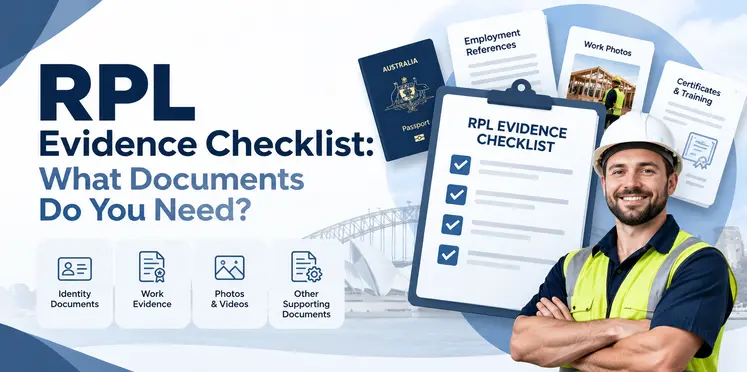
If you have relevant work experience, previous training or other learning that relates to a qualification, Recognition of Prior Learning (RPL) may allow your existing skills and knowledge to be assessed against the requirements of that qualification.
The important part is preparing evidence that helps an assessor determine what you can actually do. RPL is an assessment process — experience or a collection of documents does not automatically result in a qualification.
What Evidence Do You Need for RPL?
RPL evidence varies depending on the qualification, units of competency and your previous experience.
Common examples include:
- Work samples or portfolios
- Employment records
- Training records and certificates
- Previous assessment records
- Employer references or declarations
- Relevant workplace documents
- Relevant licences or industry records, where applicable
The assessor compares your evidence with the requirements of the relevant training product to determine whether your existing skills and knowledge meet the required competencies.
RPL Evidence Checklist
Use this as a starting point when preparing for your RPL assessment.
1. Employment and Work History
Prepare documents that help demonstrate where and how you gained your experience.
Examples include:
- Current CV or resume
- Employment history
- Job descriptions
- Relevant workplace records
- Employer or supervisor details
- Evidence of relevant duties and responsibilities
Keep in mind: proof that you worked in an industry does not, by itself, demonstrate competency in every unit being assessed. Your experience still needs to be assessed against the qualification requirements.
2. Previous Qualifications and Training
Include relevant education and training, such as:
- Certificates
- Statements of Attainment
- Training records
- Previous assessment records
- Professional development records
- Relevant licences or industry training
Previous learning can contribute to an RPL assessment where it is relevant, but the assessor still needs to determine whether your existing competency meets the requirements of the qualification.
3. Work Samples and Portfolio Evidence
Depending on your occupation, useful evidence may include:
- Completed projects
- Workplace documents
- Reports
- Portfolio items
- Photos of completed work
- Videos demonstrating practical skills
- Other relevant work samples
For example, a construction worker may have project records and photographs of completed work, while someone in community services may have relevant workplace documentation.
The evidence should relate directly to the skills and knowledge being assessed.
4. Employer or Supervisor References
An employer or supervisor may provide a declaration or reference confirming relevant duties, responsibilities and experience.
However, a reference is supporting evidence, not an automatic substitute for assessment. The RTO still needs to determine whether the evidence is sufficient and whether you have demonstrated the required competency.
What Makes RPL Evidence Strong?
Good RPL evidence needs to help an assessor make a reliable competency judgement.
Four important principles are:
|
Principle |
What it means |
|
Validity |
The evidence relates to the skills and knowledge being assessed. |
|
Sufficiency |
There is enough relevant evidence to make a competency decision. |
|
Authenticity |
The evidence genuinely relates to your own skills and work. |
|
Currency |
The evidence helps demonstrate that you are currently competent. |
RPL decisions need to be based on evidence of prior skills, learning and experience, with appropriate attention to assessment principles and rules of evidence.
So, more documents do not necessarily mean better evidence. Relevant, authentic and sufficient evidence is more useful than simply submitting a large collection of unrelated documents.
Examples of RPL Evidence by Industry
The type of evidence you prepare will depend on your occupation.
Aged Care and Individual Support
Possible evidence may include:
- Employment history
- Relevant training certificates
- Supervisor references
- Workplace documentation
- Evidence of relevant duties and responsibilities
Construction and Trades
Possible evidence may include:
- Project records
- Photos of completed work
- Workplace documents
- Job records
- Relevant licences or training
- Employer or supervisor references
Hospitality
Possible evidence may include:
- Employment records
- Workplace documents
- Work samples
- Training records
- Photos of completed work
- Employer references
These are examples, not mandatory requirements. The relevant RTO and assessor determine what evidence is appropriate for the qualification and units being assessed.
Will You Need an RPL Assessment?
RPL evidence is not just paperwork. An assessor may use different assessment methods to verify that you can demonstrate the required skills and knowledge.
RPL involves assessment, not simply document submission. Depending on the qualification and the evidence you provide, the process may involve:
- Reviewing your portfolio or work samples
- Asking questions about your skills and experience
- Checking third-party evidence
- Observing practical performance
- Completing structured assessment activities
The specific assessment approach depends on the qualification, units being assessed and the evidence required to make a valid competency judgement.
What If You Don’t Have Enough RPL Evidence?
You do not need to submit every type of document listed above. The evidence required depends on the qualification, units being assessed and your individual experience.
If your initial evidence does not fully meet the requirements, the provider may identify competency gaps and offer additional training or support where appropriate.
This is why you should be cautious about anyone promising a qualification simply because you have a certain number of years of experience.
Quick RPL Evidence Checklist
Before your RPL assessment, check whether you have relevant evidence that demonstrates your skills and experience.
Important: You may not need every item on this list. The evidence required can vary depending on your qualification, skills and previous experience.
Already Have Relevant Work Experience?
If you have experience in areas such as individual support, aged care, disability support, community services, construction, hospitality or other industries, RPL may be worth exploring.
Care Connect Training Institute helps people explore training and RPL pathways, with RPL certification provided through partner RTOs. Its business overview includes RPL pathways across Individual Support, Ageing Support, Disability Support, Community Services, Hospitality, Construction, Automotive and other areas.
The next step is to discuss your actual experience and available evidence with the relevant provider so the appropriate RPL assessment process can be explained.
Not Sure If Your Experience
Is Enough for RPL?
Find out whether your existing skills, work experience and previous training may be relevant to an RPL pathway.
Find answers to common questions
Frequently Asked Questions
Yes. Skills and knowledge gained through previous work can form part of an RPL assessment. The assessor must still determine whether your existing competency meets the requirements of the relevant qualification.
An employer declaration or reference can be useful evidence, but it is not necessarily the only evidence required. The assessor determines what evidence is appropriate.
Not necessarily. Photos can be useful work samples, but they may need to be supported by other evidence or assessment. Evidence needs to be sufficient, authentic, valid and current for the competency being assessed.
The assessor may identify areas where further evidence, assessment or training is required. RPL does not guarantee that all units will be recognised solely from your existing documents.
No. Experience can provide the basis for RPL, but your competency must be assessed against the requirements of the relevant training product.
Yes. Previous training records, certificates and assessment records can contribute to an RPL assessment where they are relevant to the qualification being assessed.


Comments are closed